The Full-Body Scan Boom: $2,500 Buys You Pictures, Not Answers
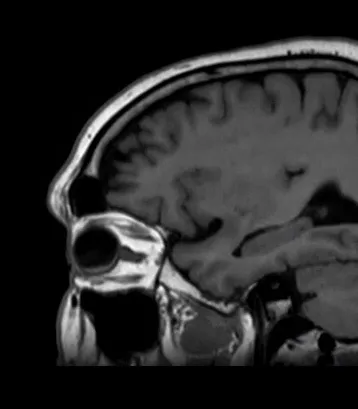
Photo: Jmarchn, CC0, via Wikimedia Commons
Two thousand five hundred dollars. That is roughly the going rate at a fast-growing crop of cash-pay imaging clinics — strip-mall suites and hospital-adjacent executive health centers that will slide you into an MRI bore for 60 to 90 minutes and hand over a whole-body readout before your next haircut.
The pitch is engineered for how men actually think about health. No waiting room. No awkward conversation about a symptom you'd rather not describe. No referral, no insurance pre-auth, no explaining yourself. Just buy the data and skip to the part where you know.
Problem is, data is not the same thing as an answer, and a whole-body MRI is an unusually clean example of that gap. The technology is genuinely remarkable. What happens after the radiologist types incidental finding is where the money and the anxiety live.
What the money actually buys
Most of these scans are non-contrast MRI — no gadolinium, no ionizing radiation, roughly 45 to 90 minutes of table time depending on the protocol. Some clinics upsell a contrast version for another several hundred dollars. A handful bundle in a low-dose CT of the chest or a carotid ultrasound.
You get a report. Sometimes a phone call with a clinician. Often an app with a PDF and a color-coded risk dashboard, which is a very persuasive thing to look at on a Sunday night.
MRI is excellent at soft tissue. It can pick up large masses in the liver, kidneys, spleen, and pancreas, structural problems in the brain, spinal cord issues, and some aneurysms. If you have a silent 4 cm renal tumor, a good whole-body protocol has a real chance of catching it.
Where the technology runs out of road
Here's the part the brochures gloss over. A whole-body sweep is not a substitute for the screenings that actually have evidence behind them, and in several cases it is meaningfully worse.
- Lungs. Lung tissue is mostly air, which gives MRI very little signal to work with. The validated tool for high-risk smokers is annual low-dose CT, not MRI. If you have a 20 pack-year history and you are between 50 and 80, that is the scan with the mortality data.
- Colon. MRI is not a colorectal cancer screening test. Polyps and early lesions are found with colonoscopy or stool-based tests, starting at 45 for average-risk adults.
- Coronary arteries. A beating heart is a motion problem. A coronary calcium score — a CT that costs maybe $100 to $300 in cash — gives you a hard number on calcified plaque that a whole-body MRI does not replicate.
- Prostate. Useful imaging here requires a dedicated multiparametric protocol, not a slice of a head-to-toe run.
- Anything small. Microcalcifications in breast tissue, sub-centimeter pancreatic lesions, flat colon polyps — these routinely slip past a screening sweep.
The incidental finding problem
This is the real story. Published series on whole-body screening MRI in asymptomatic adults routinely report incidental findings in a large share of participants — sometimes half or more. The overwhelming majority are benign and meaningless: simple renal cysts, liver hemangiomas, thyroid nodules, pituitary microadenomas, arachnoid cysts, benign bone lesions.
But a radiologist cannot tell you a thing is definitely harmless from one scan. So the report says recommend correlation with clinical findings — except you have no clinical findings. That is why you bought the scan. So the correlation becomes more imaging.
Do the arithmetic on the cascade: a repeat MRI in six months at $400 to $1,200. An ultrasound at $200 to $500. A specialist visit at $250 to $400 before labs. Possibly a biopsy, which carries its own small but non-zero risk of complications. And three to six months of a low hum of worry that no one bills you for but you absolutely pay.
Call it the certainty tax. The scan is the cheap part.
What to ask before you book
None of this means the clinics are predatory. Some are well run, staffed by board-certified body radiologists, and include a navigator who manages follow-up. Others are a magnet and a marketing funnel. The questions separate them fast:
- Who reads the study, and are they board-certified in body or neuroradiology?
- What is your reported rate of incidental findings, and what is your protocol for handling them?
- Is follow-up imaging included in the $2,500, or is that a separate invoice?
- Does the price include a clinician who will actually talk me through the report, or just a PDF?
- Which sequences are included, and is contrast extra?
- Will you send the images and report to my primary care doctor?
If the answers are vague on questions two and three, the answer to the whole thing is no.
The unglamorous version that beats it
If the goal is catching the things that kill men in their 40s, 50s, and 60s, the evidence-based list is boring and mostly cheap. Blood pressure cuff, $40, used properly at home. A lipid panel plus A1c. Lipoprotein(a) once in your life, since it is genetic and never changes. A colonoscopy at 45. Low-dose CT if your smoking history qualifies. A calcium score if you are on the fence about risk. Hepatitis C and HIV screening once. A skin check. A dental cleaning. And a conversation with an actual clinician who knows your family history.
That whole list, run through insurance plus a couple of cash-pay add-ons, usually costs less than one peace-of-mind scan — and every item on it has a body of evidence behind it.
Certainty is not for sale in a tube. If a clinic tells you otherwise, that is the finding worth paying attention to.