You Know Your Brisket's Internal Temp. You Don't Know Your LDL. Let's Fix That.
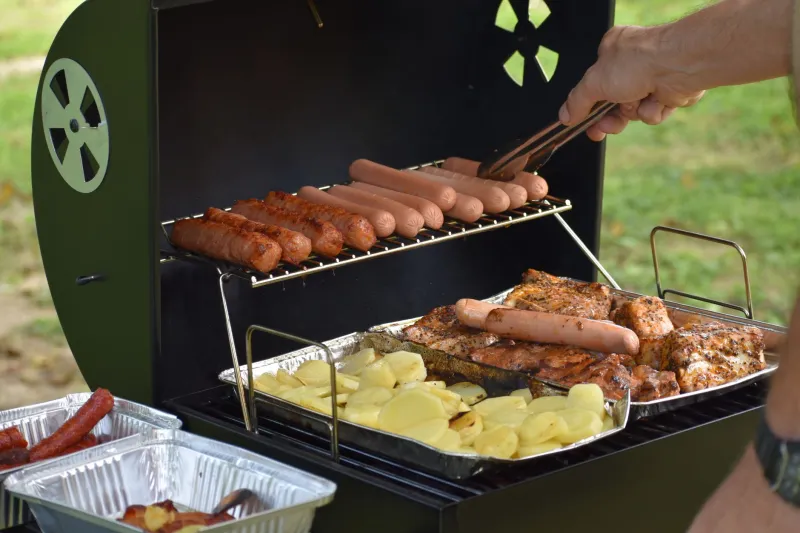
There's a particular kind of guy in every neighborhood in America. He owns a wireless dual-probe meat thermometer that sends push notifications to his phone. He knows that a packer-grade brisket stalls at around 150°F and that you push through it with patience, not panic. He can tell you the win probability of going for it on fourth-and-one from his own 30-yard line. Ask him what his HDL is and he'll squint at you like you just asked him to explain his wife's book club.
He's not lazy. He's not dumb. He's just — like most of us — directing all that obsessive, data-hungry, gear-collecting energy at everything except the one machine he can't replace.
The $400 Smoker, the $0 Checkup
We spent a few weeks talking to guys about where their attention actually goes, and the pattern was almost comical in its consistency.
Denny, 47, a HVAC contractor outside Columbus, spent roughly $2,300 last year upgrading his backyard setup — a pellet smoker, a thermometer with Bluetooth range he swears by, a temperature controller he describes as "non-negotiable." His last physical? He thinks it was "maybe 2019. Something like that."
His reasoning will sound familiar to a lot of guys: "Nothing's wrong, so why go sit in a waiting room for two hours?"
Here's the thing, though. Denny would never fire up a 14-hour cook without monitoring the temp. He checks it constantly. He logs it. He adjusts. But his own blood pressure, cholesterol, blood sugar, and vitamin D levels — the actual gauges on the machine he lives in — have been sitting unmonitored for six years.
That's not a knowledge gap. That's a habit gap. And unlike brisket, you don't get to rest the meat and try again next weekend if your heart's been running hot since 2019.
What the Numbers Actually Cost to Get
Let's put this in terms a hobbyist understands: the gear-to-payoff ratio.
A basic lipid panel, metabolic panel, and blood pressure reading costs you one awkward morning and, in most cases, a copay of $0 to $40 depending on your plan. Free community screenings happen at pharmacies, gyms, and workplaces constantly. A home blood pressure cuff — a legit, validated one, not a gas station trinket — runs about $40. One-time purchase. Cheaper than a good grill brush set.
Meanwhile, the return on that tiny investment is absurd by hobby standards. Knowing your numbers catches problems while they're still cheap and easy to fix. Finding out your A1C has crept into prediabetes territory is the health equivalent of catching your brisket at 155°F before the stall becomes a fire. Early information changes everything.
Compare that to the stuff guys happily spend on: golf launch monitors that cost more than a year of gym memberships. Fantasy football subscription tools. A fourth cast-iron skillet. None of it makes you live longer. All of it made someone else's quarterly earnings call very pleasant.
Steal the Hobbyist Framework
The good news is you don't need to become a different person. You need to apply the system you already use for your hobbies to your own body. Here's what that looks like.
Get a baseline read. Every grill master knows you calibrate the thermometer before the cook. Your baseline is a physical with bloodwork: lipids, glucose, blood pressure, and if you're over 40, a conversation about PSA screening. Do it once. Now you have a starting point.
Buy one good sensor. A home blood pressure cuff. That's it. Take readings a couple times a week, seated, relaxed. This is the same instinct as checking the smoker — just pointed inward.
Track trends, not single readings. Nobody panics over one dip in the grill temp. Same rule applies. One high blood pressure reading means re-check it. A pattern means call your doctor. Trends are the signal; single data points are noise.
Join a league. Accountability works better with stakes. The guys doing checkup pacts with friends — scheduling physicals together, comparing who actually went — have quietly turned preventive care into a group activity. It's the fantasy football of not dying early, and it works.
Upgrade gradually. You didn't buy the whole backyard setup in one day. Don't try to overhaul your entire health routine in a week. One metric, one habit, one appointment at a time.
The Guy Who Made the Switch
Denny, for the record, eventually got talked into a physical by his brother-in-law, who framed it as a "pre-season tune-up." The results weren't catastrophic, but his cholesterol was high enough that his doctor put him on a plan — diet tweaks, a follow-up, a conversation about medication.
His take now? "I check the smoker every twenty minutes. Turns out I should've been checking myself the same way. Cheaper hobby, too."
That's the whole pitch, honestly. You already know how to be obsessive about something you care about. You already understand that precision, monitoring, and small adjustments produce better outcomes. You just haven't pointed that skill at the only project with a hard deadline.
The brisket has a thermometer. Your heart deserves one too. And unlike the brisket, nobody's grading you on the bark.