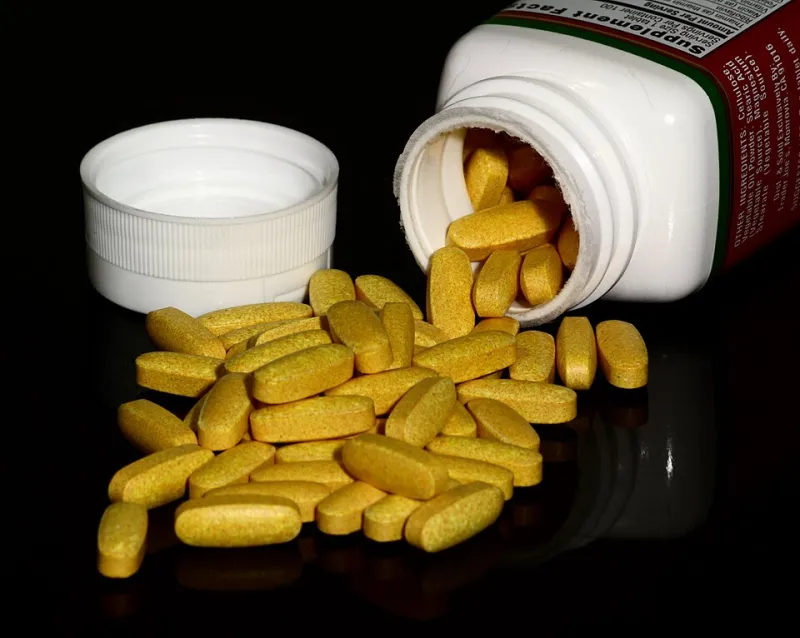
Same Pills, Blacker Bottle: We Priced the 'Man Tax' on Supplements and the Numbers Are Ugly
Photo: black supplement bottle vs plain white bottle price comparison store shelf, via i.fbcd.co
Walk into any Walgreens, CVS, or scroll through Amazon's supplement section and you'll notice something quickly: men's health products have a uniform. Matte black bottle. Aggressive sans-serif font. Maybe a silhouette of a guy who clearly lifts. And almost always, a higher price tag than the chemically identical product sitting two shelves over.
We wanted to know how big that gap actually is. So we spent a week auditing prices — in-store at national drugstore chains and online at major retailers — comparing supplement formulas that are, ingredient for ingredient, essentially the same product sold to different audiences. Call it the macho tax. Here's what we found.
The Audit: Same Molecule, Different Price Tag
We compared formulas across three buckets: products explicitly marketed to men, products marketed to women, and unisex or store-brand generics with identical active ingredients and similar doses.
A few representative examples from our price check:
Magnesium glycinate. A women's-focused brand at a major retailer: about $14 for a 30-day supply. The men's-branded equivalent, sold in a black bottle with the word "PRIME" or "APEX" somewhere on it: $21 to $24 for the same 400mg daily dose. That's a 50-70% premium for identical chelated magnesium.
Multivitamins. This one's well-documented but worth repeating. A popular men's multivitamin runs roughly 30-40% more per serving than the store-brand generic with a nearly matching panel. Interestingly, the women's equivalent of the same premium brand was often cheaper than the men's version — same company, same factory, different label.
Ashwagandha. One men's "stress and vitality" formula we found charged $34 for 600mg daily of KSM-66 — the same standardized extract available from three other brands, with less aggressive branding, for $17 to $19.
Zinc and testosterone "supporters." The wildest category. Basic zinc picolinate marketed as "male vitality support" carried markups of 2-3x over the same dose sold as plain zinc.
Not every product showed a gap. Some men's formulas legitimately add ingredients — saw palmetto, lycopene, higher zinc — and those deserve separate math. But in roughly half our comparisons, the formulas were functionally interchangeable, and the men's version still cost more.
Why the Black Bottle Works
There's real psychology here, and it's not accidental. Marketers have known for decades that men and women shop differently in the wellness aisle.
Women's supplement marketing tends to emphasize beauty, energy, and general wellbeing — softer colors, lifestyle imagery. Men's marketing leans on performance, optimization, and a subtle (or not-so-subtle) promise of edge. Black packaging signals potency. Words like "peak," "alpha," "surge," and "prime" signal results.
There's also a practical driver: a lot of guys won't buy a product that looks like it's for someone else. Surveys on men's health purchasing consistently show embarrassment and self-consciousness as barriers — men are less likely to ask a pharmacist about, say, energy or sexual health products, and more likely to grab something that looks like it belongs next to the protein powder. Marketers price that discomfort. If a guy won't buy the pastel bottle, he'll pay extra for the black one.
And it works. The men's supplement market has grown into a multi-billion dollar segment precisely because brands can charge a premium to an audience that's under-served by traditional healthcare and over-served by advertising.
The Generics Are the Same Stuff
Here's the part that matters most: in the US, supplements aren't approved by the FDA the way drugs are, but the active ingredients themselves — magnesium, zinc, ashwagandha, CoQ10 — are commodities. A third-party-tested generic magnesium glycinate and a premium men's-branded magnesium glycinate are, chemically, the same product. Often they come from the same handful of contract manufacturers.
What you're paying extra for is the bottle, the branding, and the ad campaign. Sometimes a premium brand does have better quality control — look for a USP or NSF certification or a published Certificate of Analysis. But plenty of budget store brands carry those same certifications at a fraction of the price.
How to Dodge the Tax
You don't need to swear off supplements. You just need to shop like the marketing doesn't exist:
- Shop by ingredient and dose, not by aisle. Write down what you actually want — say, 400mg magnesium glycinate — and compare labels, not covers.
- Check third-party testing. NSF Certified for Sport, USP Verified, or a published COA matters more than the font on the label.
- Price per serving, not per bottle. Capsule counts are where markups hide.
- Ask the boring question: "Is there a store brand with the same ingredients?" Pharmacists get this daily and will usually just point at it.
The macho tax isn't a scam exactly — it's a price on how the wellness industry thinks men shop. But you're allowed to opt out. The black bottle isn't doing anything the white one won't.